Kalith warrior honor code
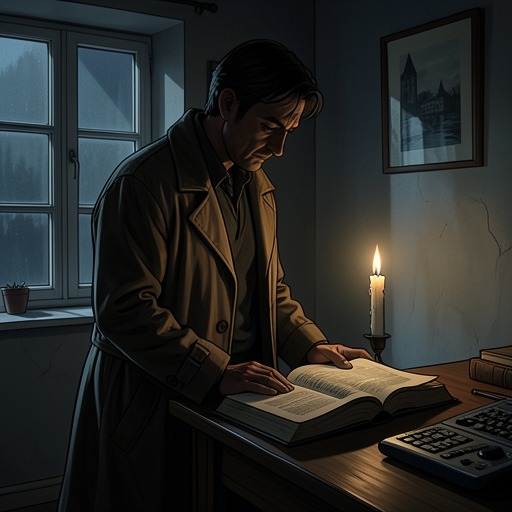
Bound by DarknessThe Kalith warrior honor code is the central moral discipline shaping Larem q’Jones’s conduct between Kalithia and the Paladin world. It gives violence limits, turns protection into a duty rather than a preference, and forces Larem to treat mercy, combat fairness, and service as obligations even when every available choice carries a cost. The code does not erase his anger or trauma; instead, it is the structure that prevents those wounds from deciding who he becomes.
Definition and Moral Inheritance
Larem’s understanding of honor comes from his former life as a Blademate to a Sworn Guardian. In Kalithia, that position had given him a recognized place, a service to perform, and a way to live among his own people with honor. Exiled into a human world where he accepts a Paladin paycheck for teaching weapons practice only a few hours each month, he feels that identity has been stripped away and that he is living on charity. His repeated temptation to return to Kalithia, despite the possibility that his death sentence might still stand, shows how strongly the code remains tied to belonging, duty, and self-respect.
The code is also tested by the Kalith who reject Larem as a traitor. When hostile Kalith call him a traitor because he “live[s] in the light,” Larem answers that he is no traitor but will not permit them to harm Sasha Willis, who has done nothing against them. Their counterclaim is that her humanity alone is sufficient guilt. The exchange establishes the code’s defining contrast: Larem interprets warrior duty through individual responsibility and protection, while the extremists reduce honor to loyalty against an enemy category.
Combat, Fairness, and the Limits of Violence
During the tunnel confrontation, Larem fights because Sasha Willis is being threatened, not because he seeks battle. After one attacker is cut across the neck, the remaining Kalith are already suffering from Light sickness, their movements jerky and uncontrolled. Larem recognizes that ending their lives is almost effortless, yet he still performs the prayers for the dead after killing them. The ritual offers little comfort, but he completes it because duty and honor demand that even enemies receive the respect due to the dead.
The same principle governs Larem’s confrontation with Duke. After defeating him, Larem picks up Lonzo Jones’s sword and offers it to Duke hilt first, explaining that he is giving him a chance to defend himself. When Duke hesitates, Larem slides the weapon across the floor rather than attacking an unarmed man. He then switches his own sword to his weaker hand so the contest will be less unequal. These gestures preserve the formal dignity of combat even though Duke is plainly outmatched.
Larem ultimately refuses to kill Duke. His disgust is intense, and he believes the world would be better without such a man, but three obligations restrain him. Killing Duke could destroy the only lead to an apparent conspiracy; Larem’s honor does not permit him to prey upon someone weak and helpless; and he has picked up the sword and made at least an effort to defend himself. Most personally, Larem spares him because of Sasha Willis, knowing she would not easily forgive a fatal act of revenge carried out in her name. Mercy therefore emerges not as softness but as disciplined self-command.
Duty as Protection and Service
The honor code makes Larem responsible for those placed in his care. After the tunnel battle, he is exhausted and sickened by the slaughter, but he does not leave Sasha Willis behind. He has vowed to get her to safety, and that vow remains binding even when he feels that her recklessness helped cause the deaths and cost him another part of his soul. His anger does not cancel the promise; it makes fulfilling it more difficult and therefore more revealing of the code’s force.
The same protective ethic appears in a quieter setting at Dr. Isaac’s animal clinic. Larem’s work there is poorly paid and offers little conventional reward, yet he returns because frightened animals respond to his touch and because he cares enough to appear when he has promised. His Kalith Healing Gift allows him to ease pain and accelerate the knitting of Chance’s injured leg bones, although he must regulate the flow carefully because healing too quickly could overwhelm a weakened animal. The code’s practical meaning expands here: service is not limited to glorious combat, and care for a vulnerable creature can demand the same restraint, attention, and responsibility as a duel.
Chance’s recovery mirrors Larem’s own struggle to trust. The dog first huddles in a corner and growls whenever Larem approaches; later, after exploring the run, Chance comes to rest his head on Larem’s knee and accepts his touch. Larem recognizes the resemblance between them: both have been hurt by those who mattered most and are searching for peace. His honor is consequently expressed through patient consent and nonviolence as much as through the sword.
Conflict with Paladin Authority
Larem’s code exists alongside, and sometimes conflicts with, Paladin rules. Devlin Bane insists that civilians cannot wander the tunnels and that security restrictions apply even to Lacey Sebastian, who works for the organization as a geologist. Sasha Willis invokes the Board of Regents’ authority to claim full access, while Devlin insists that he remains responsible for the safety of everyone entering Paladin headquarters. This dispute illustrates a plural legal order: institutional access, security procedure, and warrior honor each claim legitimacy, but none automatically resolves the others.
Larem’s own position is more precarious. Paladins have offered him protection and employment, yet he remains wary because his own people have betrayed him repeatedly. Devlin’s assurances that the Paladins owe him and the others too much to abandon them are difficult for Larem to accept. His honor requires loyalty to his people, but his present obligations increasingly involve humans and Paladins whom Kalith extremists regard as enemies. He is therefore forced to construct a life in which old allegiance and present responsibility cannot be cleanly separated.
That tension continues into the question of whether Kalith should be allowed to live in the human world. Chaz Willis argues that their presence muddies the Paladins’ once-clear mission and says that permitting them to remain may be a major mistake, although he concedes that reversing the situation would require inciting a rebellion. Larem’s existence exposes the cost of treating political boundaries as morally decisive: he is simultaneously an exile under sentence, a potential security risk, a skilled warrior, a healer, and a person bound by obligations that cross worlds.
Mercy, Belonging, and Continuing Consequences
Larem’s choices show that the honor code is not an uncomplicated ideal. It preserves his dignity, but it also burdens him with the memory of every death carried out in its name. After the tunnel fight, he feels that another large piece of his soul has been taken. The code tells him when killing is necessary, yet necessity does not make the act emotionally clean. His prayers for the dead and his exhaustion afterward reveal honor as a practice of bearing responsibility rather than escaping guilt.
His bond with Chance gives that ethic a future-facing form. Once the dog’s injuries heal, the shelter lists him for adoption, and Larem is pained because Chance does not belong to him. He cannot adopt the dog while sharing a barely adequate apartment with Lonzo Jones, and Chance now needs a large yard and a family. Larem’s willingness to release an animal he loves because the animal’s needs come first is another version of the code’s refusal to confuse possession with protection.
The code also shapes Larem’s emerging family responsibilities. When Hunter Fitzsimon learns that Larem is with Sasha Willis and that they are expecting a baby, he offers congratulations, but Larem immediately adds that if anything happens to him, a contingency must be considered. The moment joins warrior mortality to domestic obligation: Larem’s honor is no longer concerned only with surviving exile or choosing a side in a war. It must also account for Sasha and their child.
In this way, the Kalith warrior honor code becomes the principle that allows Larem to live between worlds without surrendering entirely to either one. It supports combat without glorifying slaughter, loyalty without excusing fanaticism, and mercy without denying the need to stop violence. Its deepest significance lies in the repeated choice to protect, heal, or spare when anger and inherited divisions would make killing simpler.